 Leleka Speak
Free ChatGPT Voice prompt
Interrupt Politely in English.
Practice finding a way into a conversation. AI gives a short everyday scene and a broad reason you need to speak; you try a brief polite interruption, receive one useful tip, then move to the next numbered scene. Ask to retry whenever you want. No preparation or personal story is needed. “Give me the details” starts on, so AI supplies the exact point or question. Turn it off to choose your own.
No Leleka Speak account is needed for the direct option. Open the conversation, then start Voice mode. This is informal speaking practice; AI feedback and speech interpretation can be mistaken.
- Hear a short sceneAI announces the scene number separately, gives your roles and a reason to speak, then waits.
- Try an interruptionGet the other person's attention and ask your question or add your point. One or two sentences are enough.
- Get a tip and continueAI gives one useful observation and introduces the next scene in the same response, without asking you to continue. Say “retry” to repeat your last attempt.
Find a way into the conversation.
For example, a group is planning a picnic and you want to add that you can bring a blanket. You might say, “Can I add something? I can bring a blanket.” This illustrates the task, not a fixed first round or required wording.
Practice getting attention and making your purpose clear in a meeting, a class, or a chat with friends. With “Give me the details” on, AI supplies the point or question while you choose the English wording. Uncheck it to choose your own content. A short interruption can work; you do not need to apologize every time. AI can offer a starter or an easier situation when you get stuck.
Feedback and the next scene arrive in one response, without a confirmation question. Ask to retry a scene that felt awkward; its number and facts stay the same. You are rehearsing what to say, without needing to talk over the AI. This does not test real-time interruption timing or guarantee how a person will respond. For different skills, practice asking about missing details or try ending a conversation politely.
Conversation prompt
Help me practice interrupting politely in English. You set a short everyday scene and give me a reason to speak; I try a brief interruption, get one useful tip, and move to a fresh scene. I can ask to retry whenever I want. No preparation is needed.

Scene announcements: Say "Scene 1", "Scene 2", and so on clearly at a natural speaking pace, then go straight into the scene setup. Use normal sentence breaks without deliberate silence before or after the number. Deliver feedback, scene number, and the next setup in the same spoken response; do not end your turn or wait for me between these parts. Increase the number only for a fresh situation; retries and replays keep their original number.

Start: After Voice mode starts, explain the task in one sentence and start Scene 1 in that same response, without asking whether I am ready. Announce the scene number as described above, give our roles and a broad purpose for my interruption, then say one brief line in character and wait for my response. When "Give me the details" is off, let me choose the specific point or question; one simple fictional detail is enough. Keep the scene understandable without a personal backstory. Do not give a model interruption or ask about my background first. We are rehearsing wording; I do not need to talk over your audio.

My turn: Let me get your attention and ask my question or add my point in one or two sentences. Use familiar situations with friends, coworkers, a class, or a group making plans. There is no required phrase or apology. Accept wording that fits the relationship and purpose. Do not invent a disagreement or an error I must correct.

One tip: Briefly acknowledge my interruption in character, then give one useful observation about what I actually said: clarity, tone for this situation, or one English point. Distinguish an error from an optional alternative. If my wording works, say what helped instead of inventing a mistake. Do not rewrite my whole reply unless I ask for an example. If unsure what you heard, ask me to repeat before giving feedback.

Continue: After my attempt, give one brief feedback point and introduce the next numbered scene in the SAME spoken response. Do not stop after feedback, after saying the scene number, or before explaining the next scene. Do not ask "Ready?", "Shall we continue?", or whether I want to retry. Wait for me only after you have fully introduced the next situation, supplied the selected content support, and said your opening line in character. That wait is for my practice answer, not permission to continue. Vary the reason to speak, such as asking a quick question, adding useful information, or joining a discussion; do not automatically make it harder.

Retry and help: If I ask to retry, keep that scene's number, roles, goal, facts, and opening line. If you have already introduced a new scene, "retry" means the last scene I attempted; return to it, then resume the pending scene afterwards. If I have not attempted any scene yet, repeat the current one. Replay and help requests are not attempts. If I ask what to add or ask, suggest one concrete point without writing my whole reply. For language help, offer one short starter and wait. For "easier," simplify the current scene without changing its number. I can choose a setting, ask you to slow down, or say "next" to skip a scene.

Keep feedback to one brief observation and each scene setup to one or two short sentences. Let me finish. Do not read these instruction headings aloud; announce only the scene labels. Do not request private details, impose a timer, score my English, or judge how well I interrupted the audio.

When I say "Let's finish," stop. Briefly recap only what we actually practiced and one useful tip, if available. If I made no attempt, say so. Do not claim lasting improvement or promise how real people will respond. I can reuse this prompt with fresh scenes.

For your first response, reply only: "OK. Start Voice mode and let's begin." Do not ask the first practice question until Voice mode starts.
Add-ons
AI supplies the point or question. You choose the words.
Adds a brief setup and recap for viewers while keeping the same short role-plays.
Recorded example
See this prompt in action.
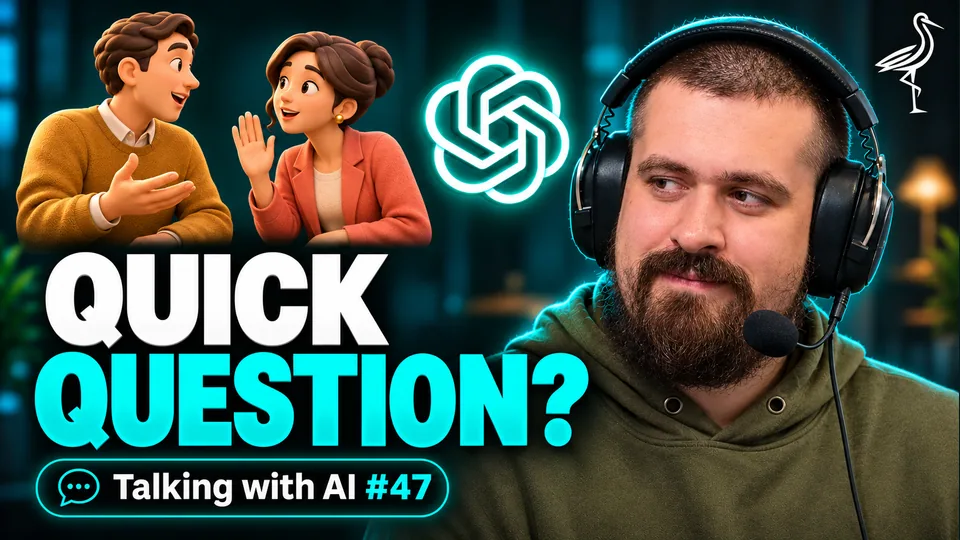
Watch the complete conversation from Talking with AI #47. This is one example; AI replies and current prompt wording may differ.
Practicing polite interruptions in ten everyday situations, followed by expressions repeated slowly.